
The Short Answer
The fastest way to protect your home before the next storm is to confirm your garage door can actually handle wind pressure, not just that it closes and locks. Hurricane season in this part of Florida runs through the end of November, so late-season systems with heavy straight-line wind and sudden pressure swings are still very much in play. A garage door that looks fine on a calm day can still be the first thing to fail once gusts hit it, and once it fails, the damage to the rest of the house often follows fast.
Why the Garage Door Is the Weak Wall
Most exterior walls are solid, braced, and tied into the home's frame. A garage door is a large moving panel held in place by tracks, rollers, hinges, and a spring system — none of which were designed with the same structural intent as a wall stud. It's also usually the single biggest opening in the entire house.
When wind hits a closed home, pressure builds on the outside. If the garage door buckles or blows inward, that outside pressure suddenly rushes into the garage and pushes outward on the roof and walls from the inside — the mechanism behind a lot of the roof and wall failures seen in wind events. A door that's rusted at the hinges, sagging on its tracks, or simply undersized for wind load is the easiest point of entry for that pressure.
Signs a Door Is More Vulnerable Than It Looks
- Visible rust or corrosion on hinges, tracks, or roller brackets — common in homes closer to the coast where salt air accelerates corrosion on exposed hardware.
- Panels that sag or flex when you push on them, especially near the bottom corners.
- Gaps between the door and track that have widened over time, which can indicate bent track or worn rollers.
- Weatherstripping that's cracked, flattened, or pulling away from the panel, letting water in during afternoon downpours and signaling the seal won't hold under wind-driven rain either.
- An opener that strains, reverses unexpectedly, or runs slower than it used to — often a sign the door isn't moving as freely as it should, usually from spring wear or track misalignment.
What Wind-Load Readiness Actually Means
Not every garage door is built the same way once you get past the paint and panels. Doors rated for higher wind loads typically have reinforced horizontal struts across the back of the panels, heavier-gauge tracks, and stronger end hardware so the door resists bowing inward or outward under pressure. Older doors, or doors installed without wind-load considerations in mind, often lack this reinforcement entirely.
If your door was installed years ago, or you're not sure what it's rated for, a bracing kit can sometimes be retrofitted to an existing door to add strength without a full replacement. In other cases — especially with a door that's already showing rust, sagging, or repeated track problems — replacement with a wind-rated door is the more reliable long-term fix. Either path is worth evaluating before storm season, not during it.
A Practical Pre-Storm Checklist
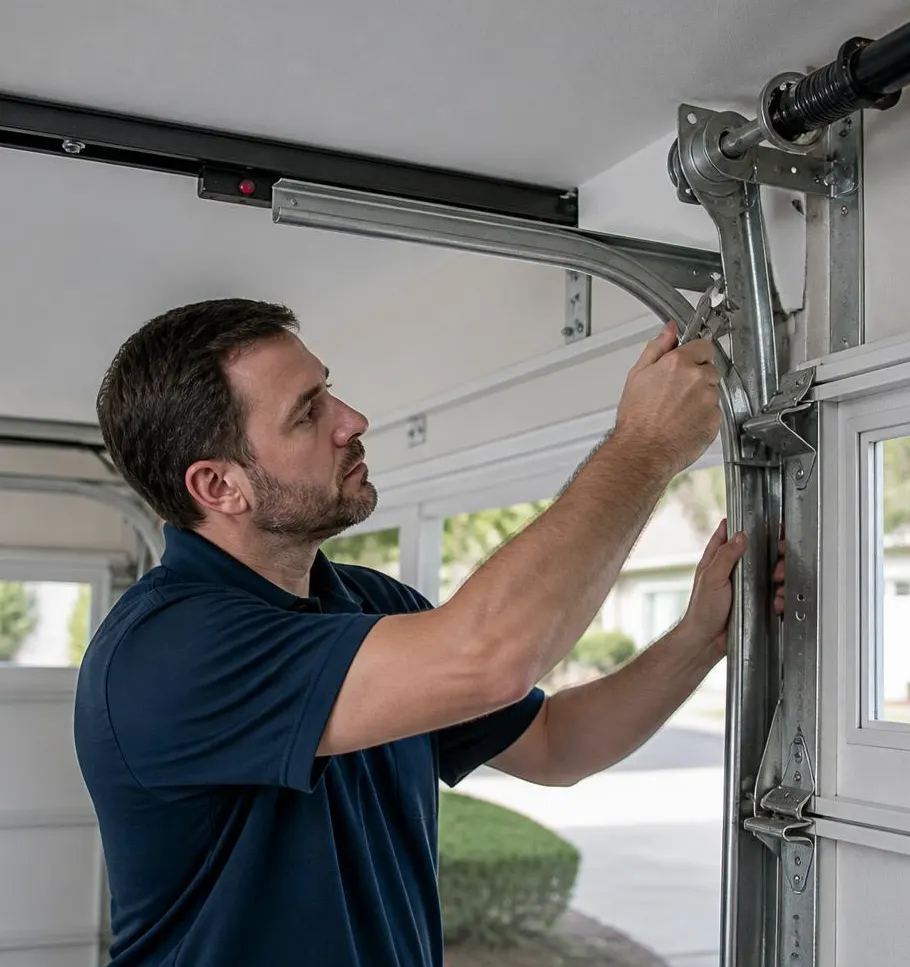
- Inspect rollers, hinges, and tracks for rust, bending, or looseness. Tighten any visible loose bolts or brackets.
- Lubricate moving parts — rollers, hinges, and the torsion spring — with a garage-door-specific lubricant. This matters more here than in drier climates, since humidity accelerates wear on unprotected metal.
- Check the springs for visible gaps, rust, or stretching. Springs under constant humidity and heat cycle faster than they would in a milder climate, and a spring that fails mid-storm leaves the door essentially unsupported.
- Clear tracks of debris so the door can move freely in an emergency, and test that the door opens and closes smoothly through its full range.
- Check weatherstripping along the bottom and sides, and replace it if it's cracked or compressed — this keeps wind-driven rain out during the kind of afternoon downpours and storm bands common this time of year.
- Confirm your opener has battery backup or a manual release you can use if power goes out, which is common during storm events.
- Ask about reinforcement options if your door is older or shows signs of wear — a bracing kit or wind-rated replacement is far easier to arrange before a storm watch than after one.
Coastal Moisture Adds Its Own Pressure
Even outside of active storms, the combination of salt air, humidity, and frequent rain puts steady stress on garage door hardware. Rust forms faster on exposed rollers and hinges near the coast, wood panels can swell and stick in their tracks, and metal components corrode at a pace that catches a lot of homeowners off guard. Routine maintenance isn't just about smooth operation day-to-day — it's what keeps the hardware strong enough to hold up when wind load actually tests it.
When to Call Yulee Garage Door
If your door is sagging, rusted at the hardware, off its track, or you're simply not sure whether it can handle sustained wind, that's the point to call in before the next storm rolls through, not after. Our Garage Door Maintenance & Tune-Up service covers a full inspection of springs, rollers, tracks, and hardware, catching corrosion and wear before it becomes a storm-day failure. If a door is already off its track or showing structural issues, our Off Track Door Repair technicians can get it realigned and assess whether reinforcement or a wind-rated replacement makes more sense for your situation.
Don't wait for a watch or warning to find out your garage door is the weak point in the house. Call Yulee Garage Door today and get your door properly inspected and storm-ready before the next system reaches Yulee, FL.